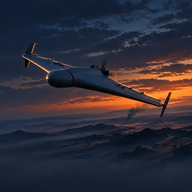
Built by people who fly.
How a small studio, a field full of model aircraft and a long list of real pilots’ answers became a flight simulator for your phone.
Why we did not want another arcade toy
Drone Ops was designed in a studio, not assembled from a template. The question we started with was simple: why do so many phone flight games feel like sliding a sticker across a painting, when a real small aircraft is one of the most honest machines there is? A wing either carries its load or it does not. A turn either costs you altitude or it does not. The air does not care how good your intentions were.
So the first rule of the project was that the aircraft would have to earn its behaviour. Nothing in the flight model is there because it looks good in a trailer.
Where the flight rules come from
The flight rules in Drone Ops were written from research on real drone airframes, and from question-and-answer sessions with working commercial pilots and retired military pilots. We asked the questions a player would never think to ask: what does the nose do when you load a turn too hard, why does a wing that was stable a second ago start to wallow, what is the first thing a pilot feels before a stall, and what do you do about it with a thumb instead of a hand?
The answers went into the game as rules, not as decoration. Where a real manoeuvre was too demanding for a phone screen, or only made sense with instruments and hands a phone does not have, we simplified it or removed it. That was a deliberate trade: we kept what teaches, and cut what only punishes. The result is three flight modes — Simple, Normal and Pro — so a newcomer and a model-aircraft veteran can both find a plane that behaves the way they expect.
The hangar behind the game
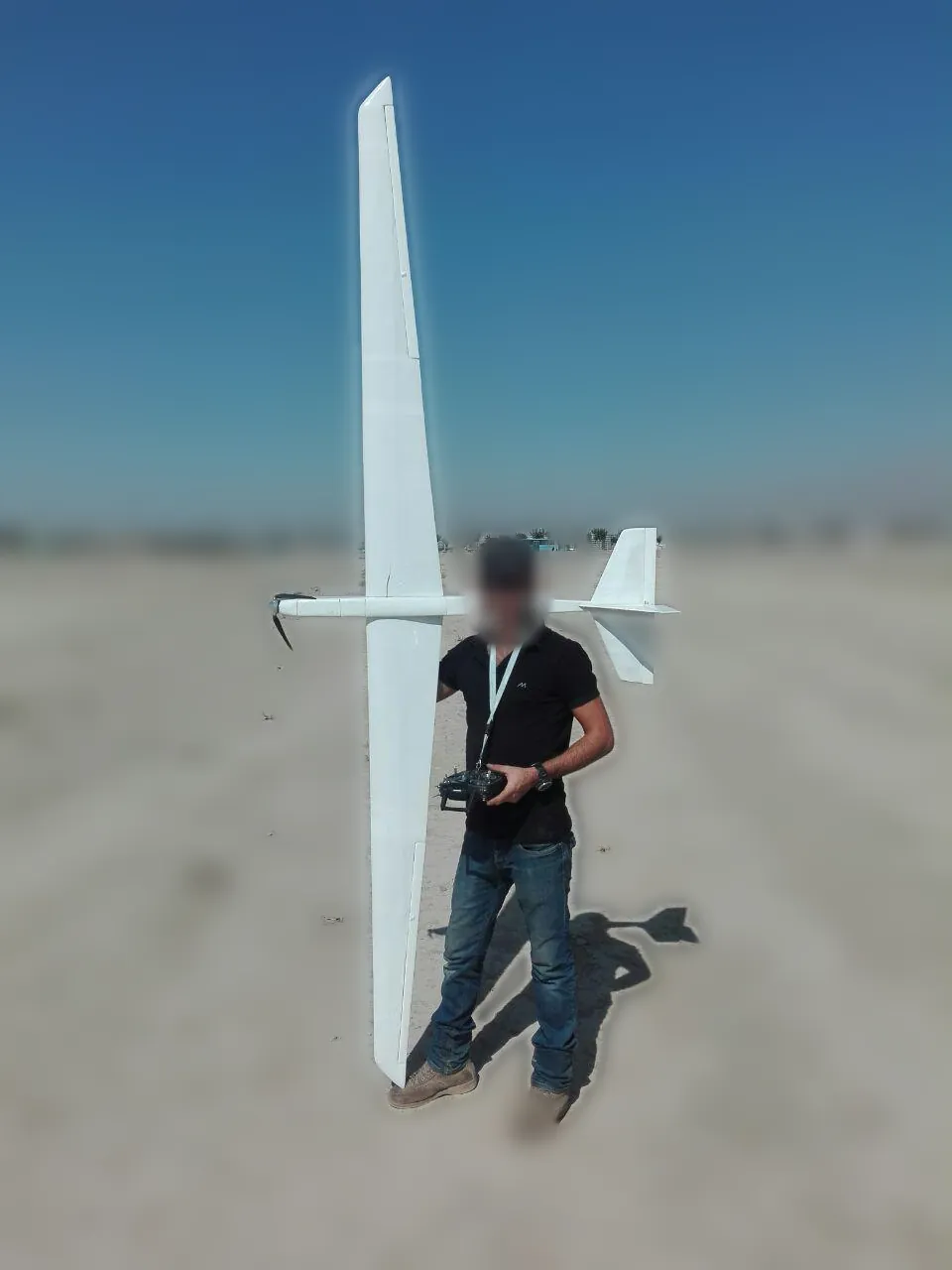
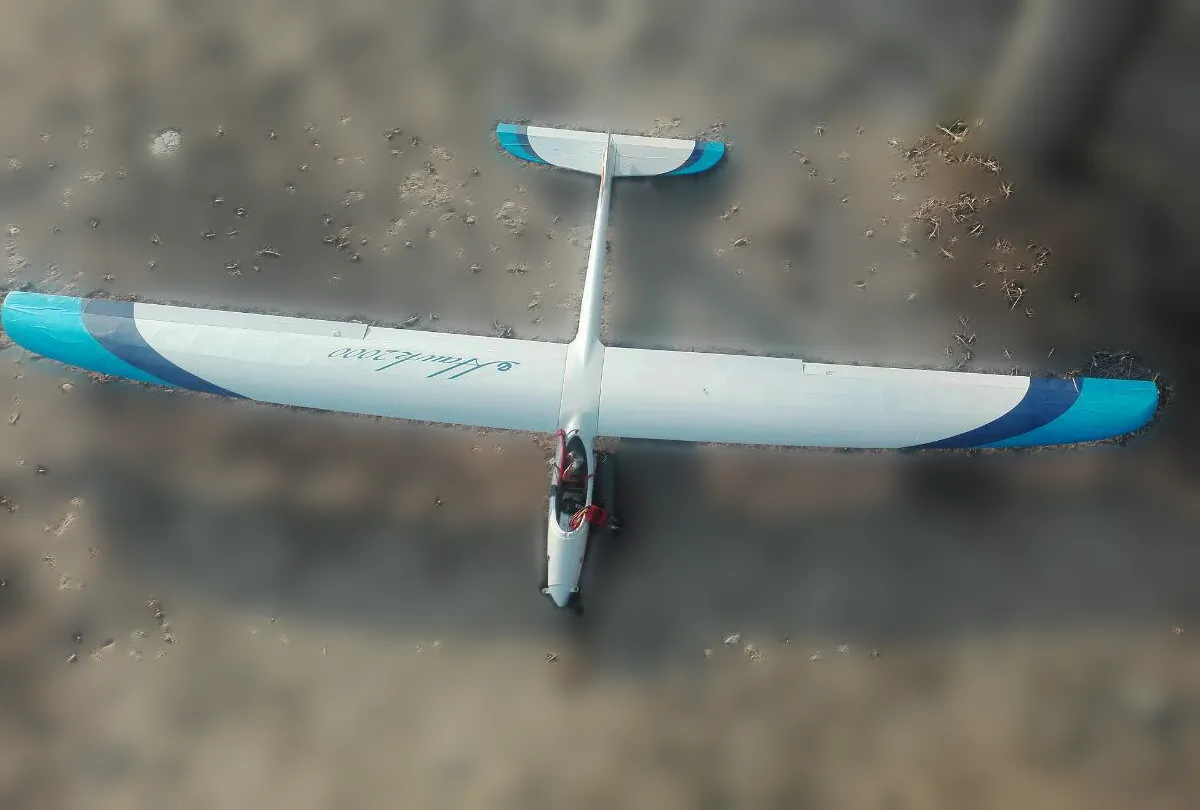
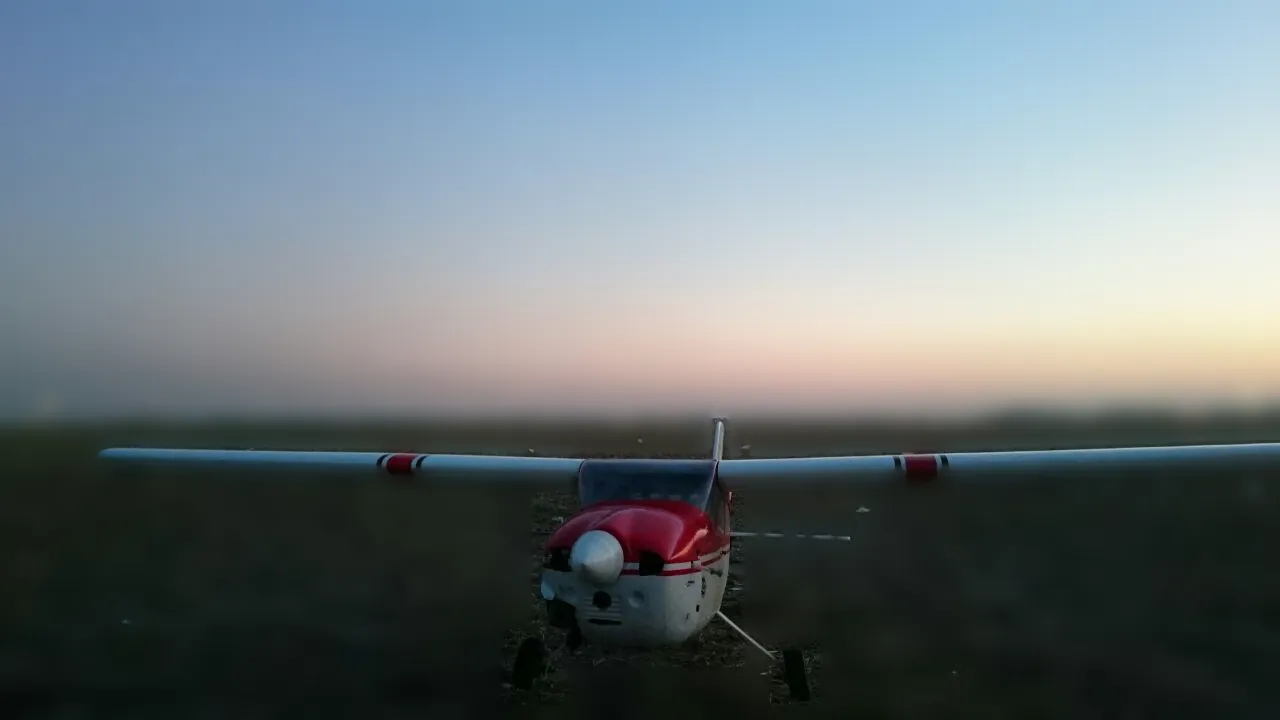
You cannot write convincing air without flying some. The photographs on this page come from our own flying days. They are working photographs rather than publicity shots, and we have deliberately obscured faces, registration marks and surroundings.
High wing: learning what “glide” means
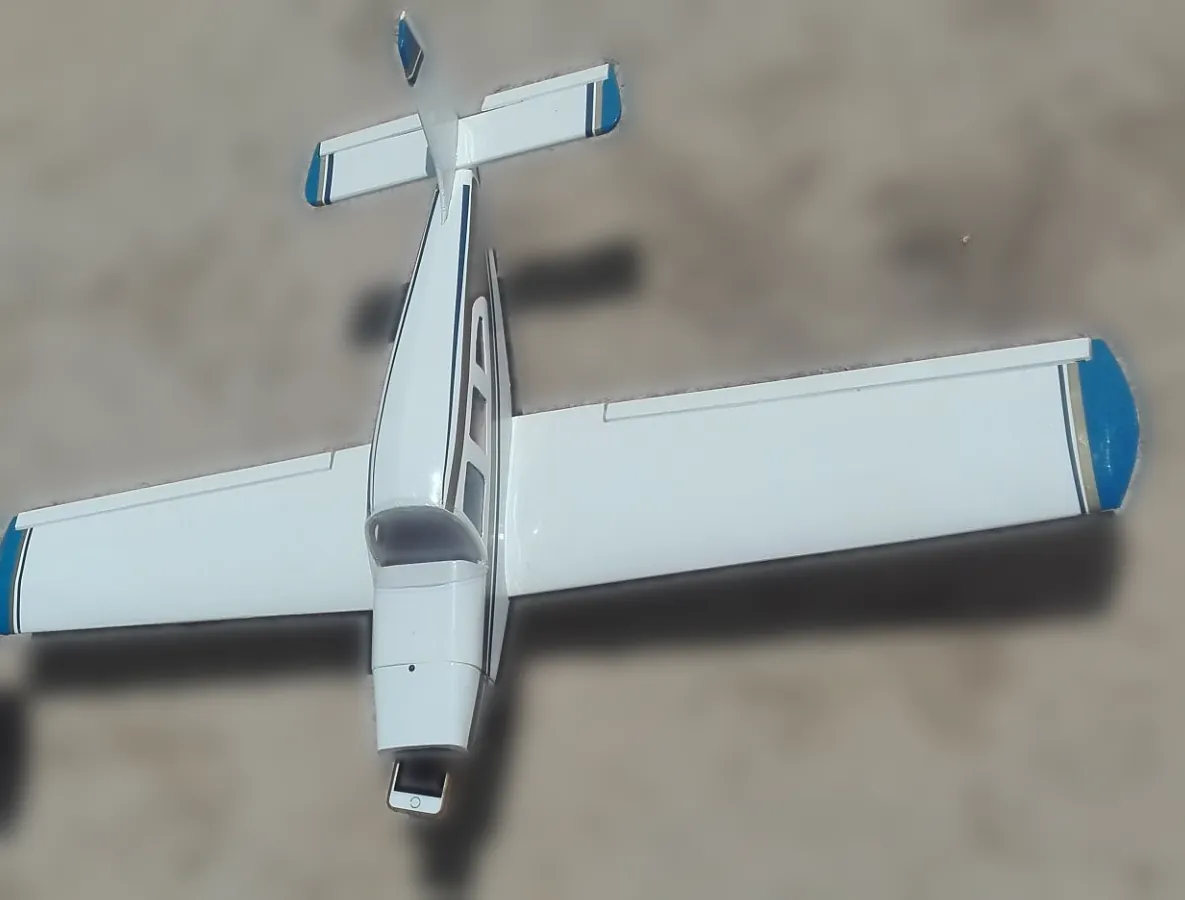
High-wing models and gliders taught us the single most important idea in the simulator: glide is a trade. Height becomes speed, speed becomes height, and a long, clean wing makes that trade look almost effortless. Watching a motor glider coast in with its propeller stopped is the quickest way to understand why the game’s loitering airframes behave as they do when you cut the throttle.
Pattern and mid wing: testing the manoeuvres
A symmetrical, mid-wing aerobatic airframe does what you tell it, in every direction, and that makes it the right tool for testing manoeuvres. Rolls, loops and reversals showed us where a control scheme starts to fight the pilot, and where a flight model has to stop pretending.
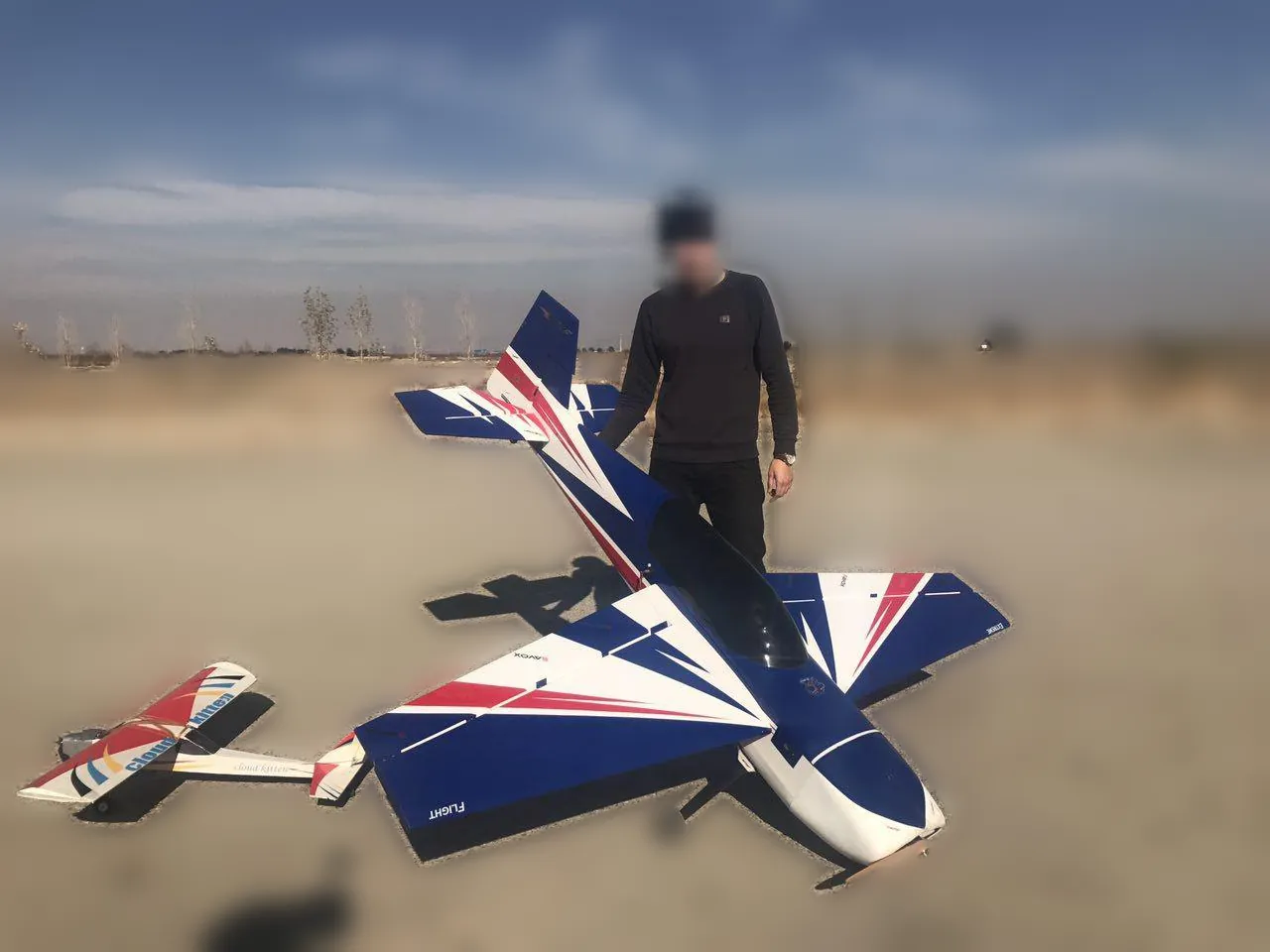
Low wing: dihedral, anhedral and the meaning of solid flight
Low-wing models were our test bench for everything else. Changing wing angles in flight — dihedral, which makes a wing want to level itself, and anhedral, which makes it eager to roll — showed us how stability and agility pull against each other. It is also where the words glide and speed stopped being words and became something you could feel through a transmitter stick: a wing that feels solid is a wing you can trust at the edge.
Foam, balsa and fibreglass
We flew everything we could get our hands on. Light electric foam models are quick to build, cheap to crash and perfect for trying an idea ten times in an afternoon. Balsa and fibreglass airframes, some running on alcohol or petrol engines, carry real mass and real engine torque, and they taught us how a heavier machine resists a turn and keeps going when you ask it to stop. Both ends of that range are in the game’s behaviour.
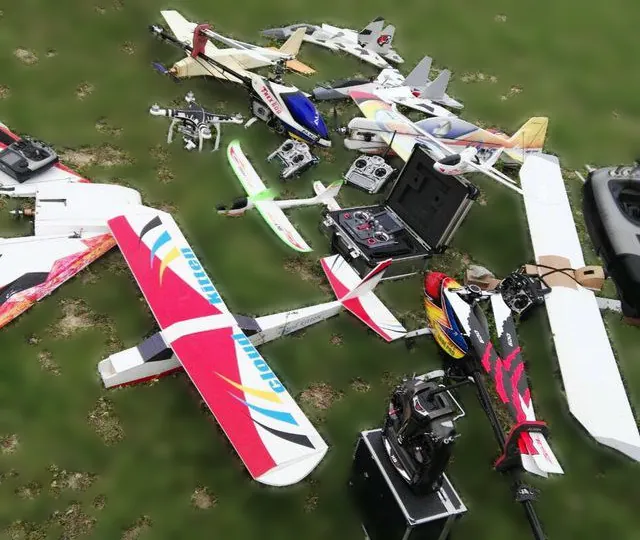
What it cost
None of this was quick. Models were flown, tuned, crashed and rebuilt. Rules were written, tested in the air, argued over with pilots, thrown away and written again. A number that looked right on paper would feel wrong on a phone in the first ten seconds, and the other way round. Much of the work is invisible by design: it is the reason the aircraft in Drone Ops feel steady in your hand, and the reason they do not feel like cartoons.
If you fly, we hope you can feel that. If you do not, we hope it makes you want to. Either way, Drone Ops is on its way to Google Play, and the FAQ covers the rest.